Doctor–Patient Video Consultations
Executive Summary
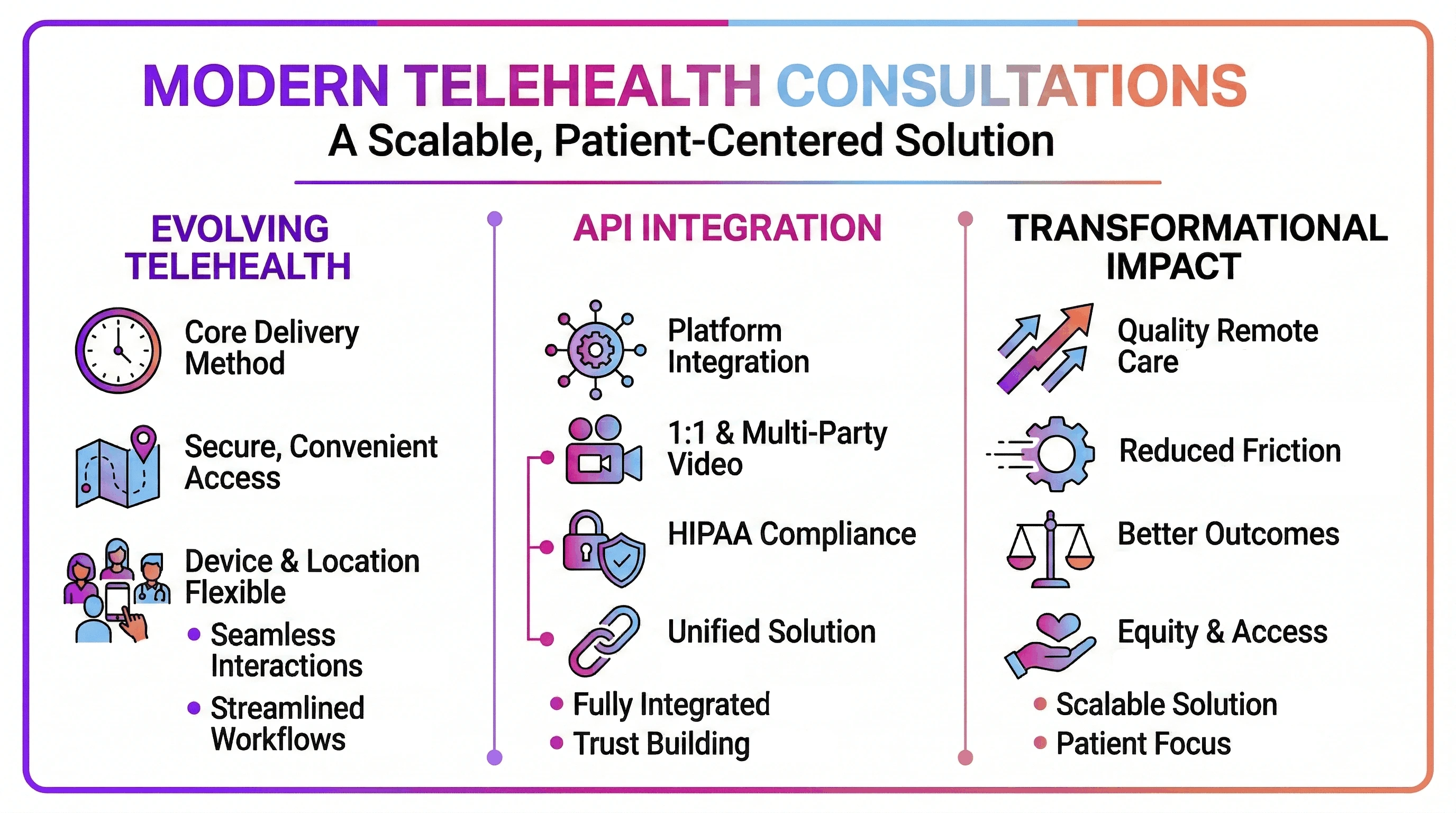
Telehealth has evolved from an optional supplement to a core healthcare delivery method. Patients increasingly expect convenient, secure, and personalized access to care from any device and any location. By embedding one-to-one and multi-party video consultations directly into a telehealth platform using the Vonage Video API, healthcare organizations can deliver seamless clinical interactions, streamline workflows, and strengthen patient trust through secure, HIPAA-aligned virtual care.
A fully integrated video experience eliminates the fragmentation of cobbled-together tools, enabling providers to deliver higher-quality remote consultations while reducing operational friction. The result is a scalable, patient-centered telehealth solution that improves access, supports better outcomes, and addresses growing healthcare equity concerns.
Problem Statement
Most healthcare organizations still rely on generic video meeting tools or fragmented digital workflows that were adopted quickly during the pandemic. While these solutions may suffice for basic communication, they introduce significant challenges for clinical care:
- Security & Compliance Risks: Common consumer communication tools are not designed for HIPAA compliance. Sensitive patient data can be exposed through unencrypted messaging, insecure storage, or unauthorized access.
- Fragmented User Experience: Clinicians and patients must switch between multiple applications for video, messaging, EHR workflows, and documentation, reducing efficiency and increasing cognitive load.
- Limited Clinical Functionality: General-purpose video apps lack features designed for healthcare environments—such as multi-party care team sessions, integrated monitoring, or clinical workflow customization.
- Growing Cybersecurity Threats: As healthcare data volume increases, so does exposure to breaches, fines, reputational damage, and operational disruption.
- Access & Equity Barriers: Non-integrated telehealth platforms fail to support comprehensive care delivery to remote and underserved communities.
These gaps make it clear that healthcare organizations require a purpose-built telehealth video solution that is secure, integrated, and scalable.
Market Opportunity
With video now a mainstream mode of care delivery, healthcare providers need embedded, integrated capabilities rather than external meeting tools. Market growth, combined with strong clinician adoption and rising patient acceptance of virtual visits, creates meaningful opportunity for platforms that can deliver secure, scalable, high-quality telehealth experiences.
Key opportunities include:
- Differentiated care workflows: Support multi-party and team-based visits, including specialist participation.
- Better than generic conferencing: Deliver healthcare-specific functionality instead of relying on consumer-grade video tools.
- Hybrid care enablement: Use video APIs to support both virtual-first services and digitally enhanced in-person workflows.
Given the market scale and continued shift to hybrid care, a telehealth platform built on video APIs is well positioned for long-term growth.