Instructor–Student Video Conferencing
Executive Summary
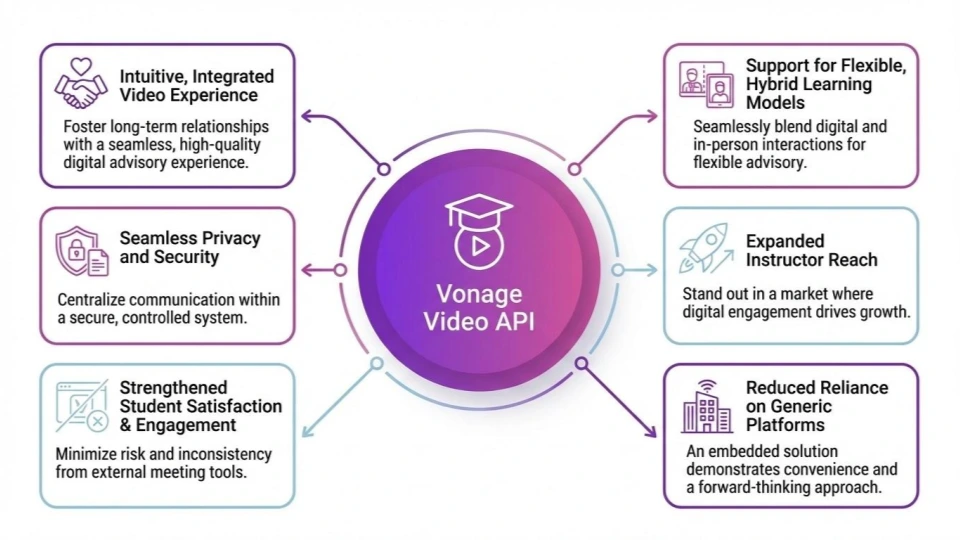
Remote learning is now a core component of the modern education landscape. Students increasingly seek flexible access to instructors, tutors, and subject-matter experts beyond the constraints of geography or fixed schedules. By embedding secure one-to-one and multi-party video conferencing directly into an education application using the Vonage Video API, institutions and edtech providers can deliver personalized support sessions, multi-student group lessons, tutoring programs, and virtual office hours with minimal friction.
A fully integrated video experience enhances the quality of instruction, expands access to qualified educators, and modernizes the learning environment. This solution allows educators to maximize their time and ensures students receive individualized attention in a convenient, secure, and effective remote setting.
Problem Statement
Traditional tutoring and instructional support are often limited by logistical barriers:
- Geographic Constraints: Students may lack access to qualified instructors or tutors in their area, especially for specialized subjects or advanced courses.
- Inconsistent User Experiences: Generic video platforms require switching between apps, disrupting learning flow, limiting student attention, and fragmenting the experience.
- Limited Scheduling Flexibility: Coordinating instructors, tutors, and students can be difficult, and traditional in-person sessions reduce availability.
- Lack of Multi-Party Support: Educational sessions often benefit from group study, peer learning, team-based assignments, and multi-student tutoring sessions, but generic tools do not support seamless, secure multi-party sessions inside the education workflow.
Market Opportunity
Education has undergone a major digital transformation in recent years. Video-based learning is no longer a temporary alternative — it is now a permanent and fast-growing part of how students receive instruction and support.
Key trends fueling this opportunity include:
- Mainstream remote learning: Remote and hybrid models remain widely adopted across schools, higher education, and tutoring.
- Growing demand for flexible, personalized support: Students increasingly rely on on-demand online tutoring, with one-to-one instruction expanding as personalized interventions become more important.
- Expectation for integrated, high-quality experiences: Multi-party sessions for group tutoring and collaboration are increasingly common, and both students and instructors expect seamless video built directly into learning platforms.
These trends create strong demand for integrated video capabilities in modern education applications, especially those focused on tutoring, coaching, intervention, and independent learning.