eCommerce Onboarding with Silent Authentication
Executive Summary
Onboarding in eCommerce often happens moments before a purchase. During that time, users are focused on completing their purchase and don't want to spend too much time creating an account. Users usually create accounts to check out faster, access saved details, or unlock loyalty benefits. That is why any delays during the onboarding stage can lead to cart abandonment and impact conversion rates and revenue.
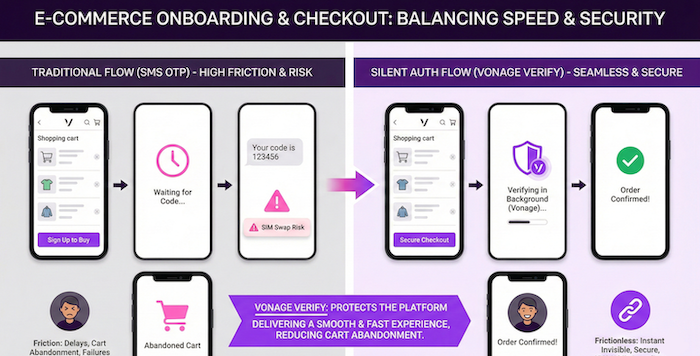
Many eCommerce platforms rely on phone number verification using SMS or voice OTPs (One-Time Passwords) during sign-up. This method may frustrate users if they have to wait for codes, deal with delivery failures, or make multiple attempts. Situations like that disturb the checkout process and may prevent users from completing their buying journey. Additionally, OTPs alone are not always effective in identifying phone numbers that may have been recently compromised, recycled, or affected by SIM swap activity
Vonage Verify Silent Authentication can help eCommerce businesses automatically verify low-risk users in the background, ensuring the onboarding and checkout flow is uninterrupted. OTPs can then be reserved for higher-risk cases. This approach can protect the platform while delivering a smooth and fast experience to customers.
Market Opportunity
In eCommerce, onboarding often occurs during checkout, making it a critical moment that directly impacts conversion rates and revenue - even slight delays during account creation or verification can cause users to abandon their carts and move to competitors. Additionally, eCommerce fraud evolves, so platforms must strengthen identity and phone number verification to protect transactions and accounts.
This presents an opportunity to:
- Increase conversion rates and revenue by removing obstacles for low-risk customers at the key stages of the purchasing process.
- Expand globally with a more reliable verification method that works across devices, networks, and regions.
- Set the brand apart by providing quicker access to exclusive deals, stored payment options, and personalized experiences.
Problem Statement
eCommerce platforms often use OTP-based verification during account creation, particularly at checkout. This method frequently adds friction at the most critical moment of the purchasing process.
Key challenges:
- Revenue-impacting friction: OTP delays and retries create unnecessary pauses during checkout, forcing a user to leave the app to check an SMS inbox where they may see a notification from a competitor or simply lose interest.
- Cart abandonment at the finish line: Repeated OTP failures or delays when the intent to purchase is highest may cause users to abandon both onboarding and the purchase, turning a successful marketing spend into a lost conversion.
- Limited phone ownership assurance: SMS or voice OTPs confirm only that a device can receive messages, not that the phone number actually belongs to the buyer.
- Increased fraud risk: Accounts created with SIM-swapped or recycled numbers may increase the risk of later account abuse or fraudulent behavior.