Remote Hearing Aid Fitting Video Consultations
Executive Summary
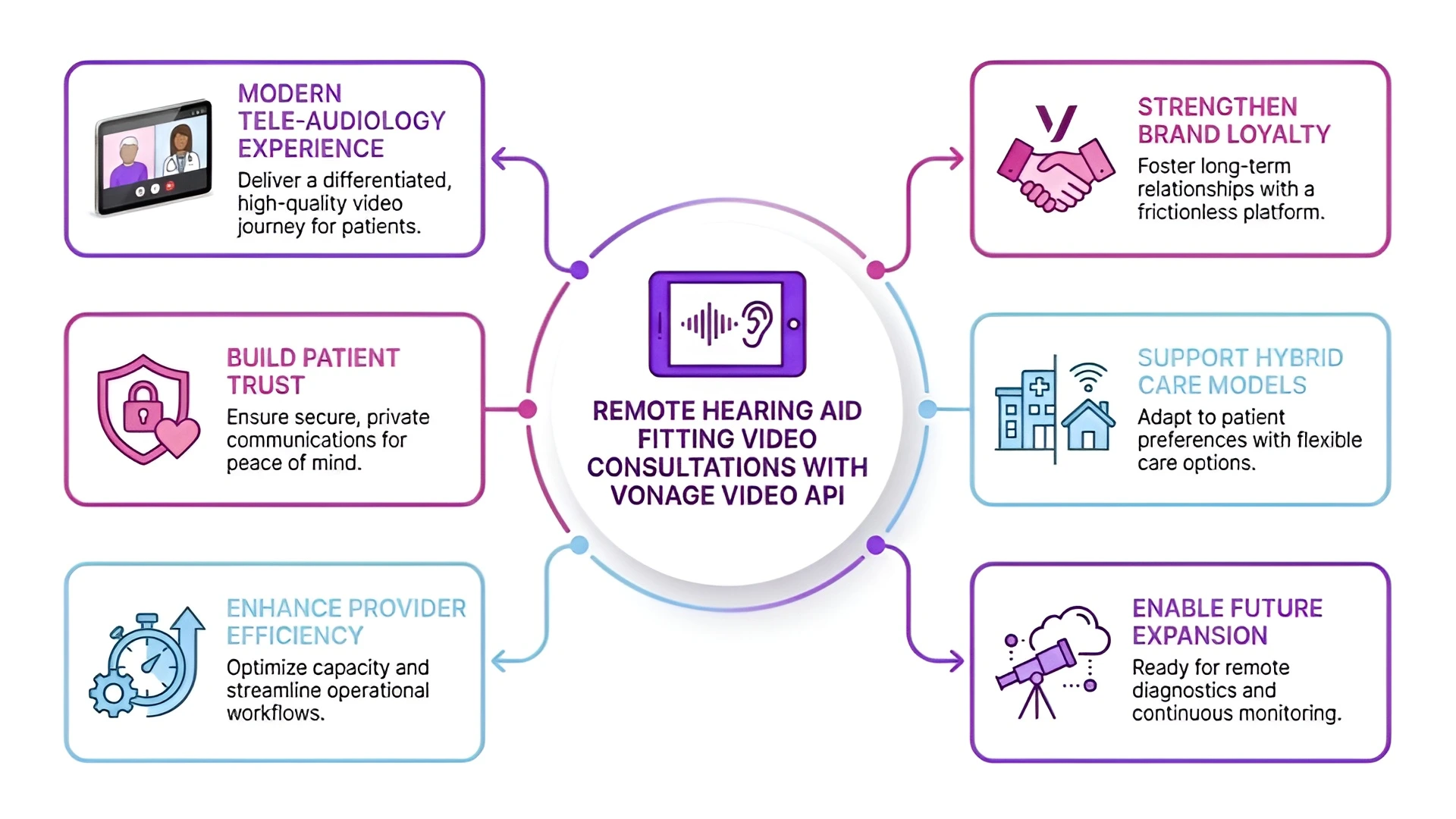
Remote hearing aid fittings are becoming a modern standard in audiology as patients increasingly expect convenient, personalized, and accessible care. By integrating secure one-to-one or multi-party video consultations directly into a telehealth platform using the Vonage Video API, hearing care professionals can conduct fittings, adjustments, troubleshooting, counseling, and follow-up visits from any location.
This integrated approach enhances patient satisfaction, especially for elderly or mobility-limited individuals, while reducing clinic workload and improving follow-up adherence. A fully embedded video experience eliminates reliance on generic video apps and ensures a seamless, branded workflow tailored to audiology needs.
Problem Statement
Traditional hearing aid fittings often require multiple in-person appointments, creating avoidable barriers for both providers and patients.
- Access and efficiency challenges: Elderly or mobility-limited patients may face travel and scheduling difficulties, while audiologists spend valuable clinic time on adjustments that can often be handled remotely.
- Technology and workflow gaps: Consumer video apps are not designed for telehealth applications, resulting in disconnected workflows, inconsistent performance, and weaker alignment with healthcare privacy and security needs.
- Care quality and coordination limitations: Effective fitting and troubleshooting requires clear, real-time visual communication, and involving caregivers through external tools can add friction and risk.
These constraints highlight the need for a secure, integrated, purpose-built video solution.
Market Opportunity
The hearing health industry is rapidly shifting to digital-first care as hearing loss rises with aging populations and patients expect more convenient support. Key trends driving this change include:
- Tele-audiology is now essential: Modern hearing aids depend on digital adjustments, remote configuration, and real-time tuning.
- Remote care demand is growing: Patients want faster follow-ups and fewer clinic visits, especially when travel is difficult.
- Hybrid care is mainstream: Practices increasingly combine in-clinic and remote appointments, with strong adoption among older adults.
For providers, this model improves efficiency by increasing appointment capacity, reducing low-value in-office visits, and extending care to rural or homebound patients. It also supports better hearing aid utilization and patient satisfaction.