Silent Authentication for B2B SaaS Logins
Executive Summary
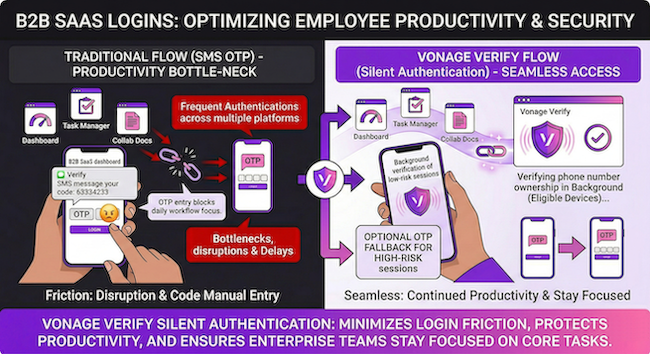
Employees who use SaaS platforms frequently log into the services through mobile applications or mobile-assisted authentication flows to review dashboards, approve requests, and collaborate on tasks. However, the need for frequent authentication across multiple SaaS applications can create bottlenecks, particularly in large organizations. Even minor delays or failures during the login process can disrupt productivity, delay project timelines, and increase IT support requests.
Vonage Verify Silent Authentication can be implemented as a mobile-assisted, risk-based second factor within existing workforce authentication frameworks, particularly in SaaS platforms with dedicated mobile applications. It enables background verification of low-risk sessions and allows employees to continue working seamlessly while maintaining strong account security. For high-risk or unsupported sessions, one-time passwords (OTPs) can serve as a fallback option. This solution minimizes login friction, protects productivity, and helps ensure that enterprise teams can stay focused on their core tasks.
Market Opportunity
SaaS platforms must balance security with usability. Frequent OTP logins can help protect accounts, but they may also disrupt employee workflows. These interruptions can lead to decreased team efficiency, slow down cross-department collaboration, and increase the workload for IT support.
This creates an opportunity to:
- Ensure consistent employee access during peak login times.
- Implement risk-based login verification that adjusts to the level of session risk.
- Lower support costs by decreasing the number of OTP-related helpdesk requests.
- Strengthen trust in enterprise SaaS tools by providing secure and reliable login experiences that do not compromise workflow continuity.
Problem Statement
In large enterprises, employees frequently switch between multiple SaaS platforms to complete tasks and collaborate. While relying on OTPs may protect accounts, it may also introduce delays that disrupt workflow, slow project timelines, and increase IT support workload.
Key challenges:
- Workflow interruptions: Step-up OTP requests during sensitive or out-of-pattern logins can disrupt smooth access to critical SaaS tools.
- Business impact: Authentication failures can delay task completion and negatively affect deliverables.
- Operational inefficiency: Repeated login failures result in more time spent resolving authentication issues than on actual work.
- Increased IT workload: Helpdesk inquiries rise due to login issues.
- Employee frustration: Difficulties during routine logins can negatively impact platform adoption and overall employee satisfaction.