)
What is RCS (Rich Communication Services)?
Time to read: 12 minutes
Rich Communication Services (RCS) allows you to send messages to devices connected to cellular telephony networks; it is a standards-based IP messaging channel supported by telecommunications companies globally. RCS messages can include text, photos, videos, and files, as well as interactive elements such as suggested reply and suggested action buttons. Unlike other messaging platforms, RCS works right out of the box without requiring users to download a separate messaging app. It's a universal, native application that's ready for immediate use on compatible devices.
I'll give you an overview of RCS, share real-world use cases, and provide coding tutorials and resources to help you get started with RCS integration.
To understand why RCS matters, it helps to see how it compares to the messaging channels you're already familiar with.
SMS (Short Message Service) has been the backbone of business messaging for decades, but it's limited to plain text messages with a 160-character limit. While it has near-universal reach, it doesn't support rich media, interactivity, or branding.
MMS (Multimedia Messaging Service) allows sending images and videos, but it comes with limitations. Media quality is often compressed, file size restrictions are tight, and delivery can be inconsistent across carriers. You can learn further, What Can I do with MMS?
Unlike MMS, which often compresses media and limits file sizes, RCS supports high-resolution content that truly showcases your products and services. RCS represents the next evolution of messaging. It brings together the best aspects of SMS's universal reach with the rich interactive experiences users enjoy in modern messaging apps. It allows you to send high-resolution photos and videos, and supports files. And you can send text messages to up to 3,072 characters, and it offers interactive elements like buttons, suggested replies, and carousels. You can check all the supported media types.
Unlike proprietary messaging apps, RCS is built on an open standard supported by mobile carriers worldwide. It works natively in users' default messaging apps with no additional downloads required and automatically falls back to SMS when RCS isn't supported.
An RCS message can include much more than basic text. RCS messaging supports high-resolution photos and videos, read receipts, cross-app connectivity, group chats, large file support, and enhanced security. All these features enable smoother, more satisfying conversations that can build trust and enhance engagement with your customers.
 Vonage RCS
Customers are increasingly wary of text messages due to widespread concerns about spam and phishing. They hesitate to click links or respond to SMS messages from unknown senders.
RCS solves this problem through verified sender branding, allowing customers to instantly recognize your brand via your business logo, verified checkmark, and complete profile, which significantly boosts their confidence in engaging with your messages.
The verification process also protects your brand identity, making it much harder for scammers to impersonate your business. Beyond visual branding, RCS messages are encrypted in transit and benefit from carrier-level verification processes. RCS Business Messaging does not support end-to-end encryption; messages pass through Google's servers for security and compliance scanning.
Messages are scanned for malicious content, phishing attempts, and malware URLs. This combination of verified branding and enhanced security creates a safer messaging environment that builds trust between businesses and their customers.
RCS transforms messaging from a one-way notification channel into a rich interactive conversation platform. You can capture attention with high-quality images, videos, and GIFs that maintain their quality and impact.
The interactive capabilities of RCS are what really set it apart. You can include suggested replies that let customers respond with a single tap. Action buttons in messages let customers book appointments, place orders, open maps, add calendar events, or dial your support line without leaving the conversation.
This streamlined experience reduces drop-off significantly compared to traditional SMS messages that require customers to click through multiple links.
Rich cards and carousels take this even further. They allow you to showcase multiple products, services, or options in a single message. Customers can swipe through a product catalog, compare options, and make selections right within the messaging interface. These features create an app-like experience without requiring customers to download anything new.
Vonage RCS is a business messaging solution designed to revolutionize how brands interact with customers by offering rich, engaging, secure, and verified real-time communications capabilities. What makes Vonage RCS particularly powerful is its seamless integration into the broader Vonage Communications Platform.
Unlike point solutions that require separate integrations for each messaging channel, Vonage RCS is part of the multi-channel Messages API, and you can send RCS, SMS, MMS, WhatsApp, Facebook Messenger, and Viber messages through a single API integration.
When you build with Vonage, you're not locked into a single channel. You can reach customers wherever they are with intelligent failover, ensuring messages always get delivered.
Vonage simplifies what can otherwise be a complex onboarding process. RCS requires brand verification and carrier approvals, which Vonage handles through established relationships with carriers globally.
All customer onboarding is supported through the Onboarding Portal within the Customer Dashboard or programmatically via the RCS Onboarding APIs for customers who need to manage multiple agents at scale.
The best way to understand what RCS makes possible is to look at how businesses are already using it. Here are real-world examples of companies that have successfully integrated RCS into their customer communication strategies.
FREENOW, a leading European mobility platform, needed customers to trust and act on ride confirmations, payment receipts, and service updates at scale. Traditional SMS lacked the branding, interactivity, and visual clarity required to deliver a premium mobility experience. Customers couldn't easily confirm rides, access support, or view important trip details within the message itself.
FREENOW implemented branded, verified RCS messages for all ride and payment communications. Customers now receive interactive messages that allow them to confirm rides and access support with a single tap. Rich media updates include maps showing driver location, driver photos for easy identification, and vehicle details for added security. The company also layered secure authentication and fraud protection directly into the messaging experience, creating a safer environment for both riders and drivers.
mydealz, a successful social shopping community, needed to capture attention quickly for time-sensitive deals and special offers. Text-only SMS couldn't convey urgency, showcase product visuals, or demonstrate value effectively in crowded inboxes. By the time customers clicked through to view deals, many had already expired or sold out.
mydealz implemented visual deal alerts featuring product images, pricing information, and prominent discount tags. Interactive buttons allow users to view, save, or share deals instantly without leaving the message. The company personalizes deal recommendations based on user preferences and shopping history, delivering relevant offers through RCS's rich media capabilities. Real-time delivery ensures customers see hot deals immediately, emphasizing urgency through visual elements and countdown timers.
Guest Connect, a campaign management and messaging platform provider, wanted to offer richer messaging capabilities to its business customers. However, they faced significant complexity around RCS verification, technical integration, analytics reporting, and scaling to support multiple clients. Their business customers weren't technical, so the solution needed to be accessible to non-technical users while still providing enterprise-grade capabilities.
Guest Connect partnered with Vonage to leverage the Messages API, which provides built-in support for RCS and SMS, with automatic failover between channels. Vonage's carrier relationships simplified the RCS account verification process that would otherwise require Guest Connect to negotiate with carriers individually. The low-friction integration enabled Guest Connect's non-technical business users to launch RCS campaigns without deep technical expertise.
We have several RCS-focused blog posts on our developer blog. You can find some ideas below to get started.
Send Visual Weather Forecasts With Vonage RCS and Google AI is a tutorial that showcases what makes RCS special. This app fetches the weather for a given city, uses Google's Imagen model to generate a descriptive weather image, creates a text summary with Gemini, and sends everything as a rich card via RCS using the Vonage Messages API. It's a great introduction because it demonstrates both the media capabilities and the interactive elements that make RCS powerful. You can follow along with both the blog post and the accompanying video tutorial.
Build a Fantasy Adventure Game With Rails and RCS takes a creative approach to learning RCS. This Ruby on Rails tutorial shows you how to build an interactive text-based adventure game delivered through RCS messages. Players receive story segments with rich cards showing scenes and characters, then make choices using suggested reply buttons. It's an engaging way to learn how RCS handles state, processes user input, and creates a flowing, conversational experience.
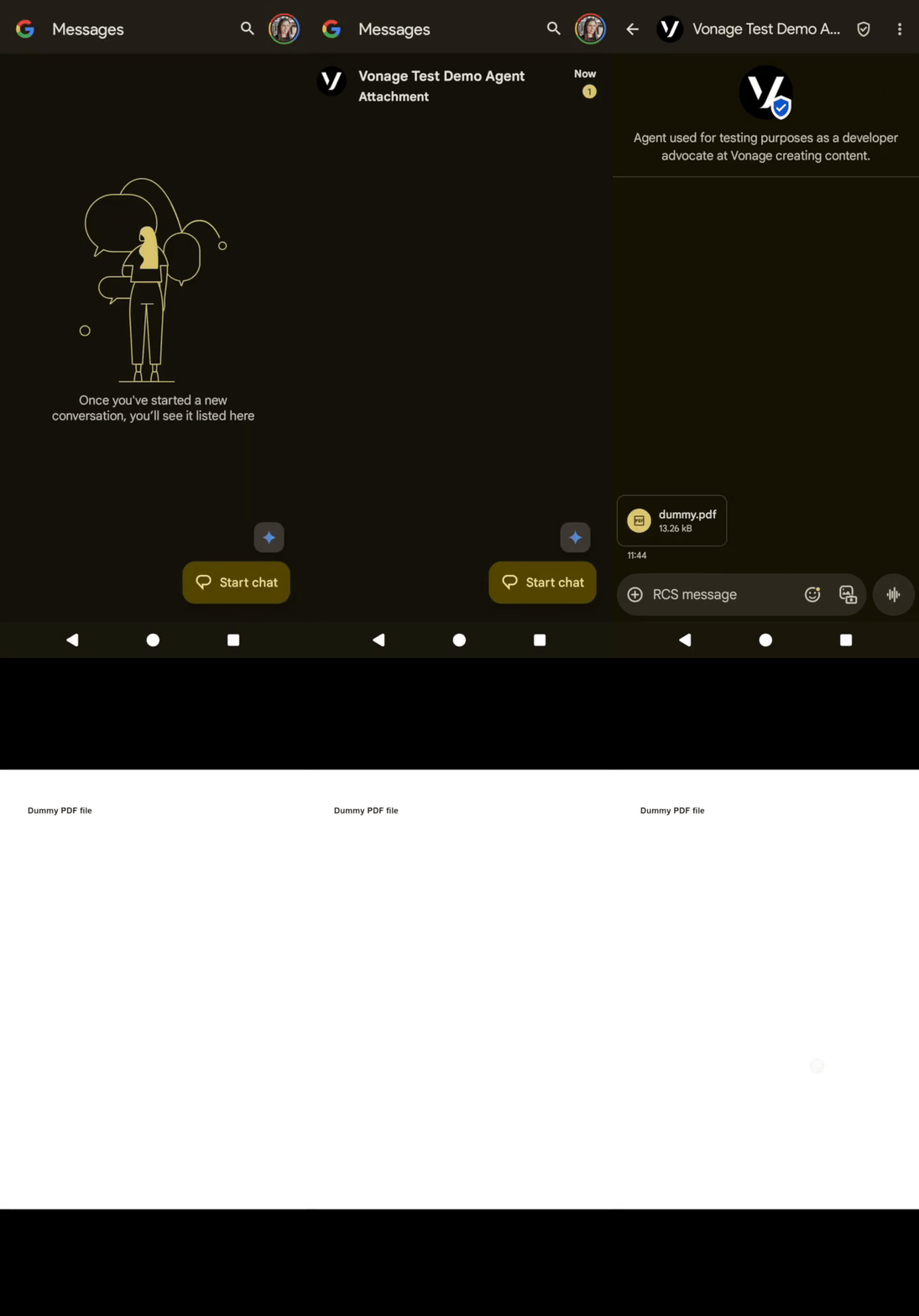
Send and Open RCS Files Using GitHub Codespaces is perfect if you want to start coding immediately without any local setup. This tutorial shows you how to send PDF files, tickets, or product documents via RCS using GitHub Codespaces as your development environment.
 RCS DemonstrationHow to Send RCS Suggested Replies with Ruby on Rails focuses specifically on making conversations more efficient. Suggested replies are tappable options that appear as chips below your message, allowing customers to respond instantly without typing. This tutorial shows you how to create custom RCS messages with reply buttons, handle the responses in your Rails application, and create flowing multi-turn conversations that feel natural and intuitive.
RCS Messaging with Laravel, Livewire, Reverb, and Echo focuses on bringing RCS messaging to life with Laravel, using Livewire, Reverb, and Echo alongside the Vonage Messages API. The tutorial walks you through building a real-time chat interface where you can send RCS messages outbound via the Vonage PHP SDK, receive inbound messages through a webhook, and have the UI update instantly without writing complex frontend JavaScript.
Rich Communication Services (RCS) is an advanced messaging protocol that enhances traditional SMS by enabling features like multimedia sharing, read receipts, and real-time messaging over mobile data or Wi-Fi. Think of it as the next evolution of SMS, upgrading standard text messages into a two-way, media-rich conversational experience that supports images, videos, suggested replies, and real-time features like typing indicators and read receipts.
Unlike proprietary messaging apps that require downloads and account creation, RCS works natively in the default messaging app on compatible smartphones; customers don't need to download anything new or learn a different interface; the enhanced features simply appear when messaging with RCS-enabled businesses.
Rich communication services enhance text messaging by enabling features like high-quality media sharing, read receipts, real-time typing indicators, group chats, and interactive messaging.
Businesses use RCS for appointment reminders with calendar integration, order confirmations with delivery tracking, customer support with interactive troubleshooting menus, marketing campaigns with visual product showcases, and authentication workflows with secure one-time password delivery..
RCS improves the customer experience by enabling businesses to send interactive messages with images, carousels, buttons, and quick replies, making it easier and more enjoyable for customers to engage directly with brands.
Consider a typical customer journey: with SMS, a customer might receive a text confirmation, then need to click a link, wait for a page to load, navigate a website, and finally complete an action. With RCS, that entire journey happens within the message. The confirmation appears as a branded rich card, with all relevant information displayed. The customer can confirm, reschedule, or request support with a single tap.
Rich Communication Services is designed for businesses that want to enhance customer engagement through more interactive, personalized, and feature-rich messaging. While any business can benefit from RCS, it's especially valuable for certain industries.
RCS is particularly well-suited for retail and e-commerce businesses that want to showcase products visually, send personalized recommendations, and enable quick purchasing decisions. Customer service organizations benefit from interactive troubleshooting menus and the ability to resolve issues without forcing customers to call or visit websites. Travel and hospitality companies can send boarding passes, booking confirmations, and real-time updates with all relevant information displayed in rich, visual formats.
Banking and financial services find RCS valuable for secure account notifications, transaction confirmations, and fraud alerts where verified sender identity is crucial. Healthcare providers use RCS for appointment reminders with calendar integration, prescription notifications, and patient communications where security and trust are paramount. Any business that sends high volumes of customer communications and wants to stand out in crowded message inboxes should consider RCS.
Most modern smartphones and major carriers support RCS, but compatibility varies by region, device, and carrier. To use RCS, both the sender and recipient must have RCS-enabled devices and services. In some regions, carriers require users to opt in to RCS services, though this is becoming less common as RCS support expands. You can check the current RCS Coverage.
You might encounter both terms, RCS and RBM, when researching business messaging.
RCS is the underlying protocol and standard for person-to-person messaging. It's designed to enhance how individuals communicate with each other through their mobile devices.
RBM is RCS, specifically used by businesses to communicate with customers. When businesses implement RCS to send branded messages, provide customer support, or run marketing campaigns, they're using RBM. The terms are often used interchangeably in business contexts, but technically, RBM refers to the business-to-consumer application of the RCS protocol.
When you use Vonage RCS for your business communications, you're implementing RBM. Vonage handles the complexity of RBM agent registration, carrier verification, and compliance so you can focus on creating great customer experiences.
Rich Communication Services represents a significant evolution in business messaging, bringing together the universal reach of SMS with the rich interactive experiences customers expect from modern communication channels. For developers who want to explore the full range of RCS capabilities, the Vonage API Support Center maintains a curated collection of RCS resources, including API specifications, concept guides, and code snippet pages for every RCS feature.
Have a question or want to share what you're building?
Subscribe to the Developer Newsletter
Follow us on X (formerly Twitter) for updates
Prefer video? Watch tutorials on our YouTube channel
Connect with us on the Vonage Developer page on LinkedIn
Help us improve our developer experience by filling out our Voice of the Developer Feedback
Stay connected and keep up with the latest developer news, tips, and events.